


Why Washing Machines Leak and What to Do About It
 January 19, 2026
 Read 10 minutes
 January 19, 2026
Content of the Article
A washing machine leak is one of the most unpleasant household problems and one of the most common reasons homeowners end up needing urgent washer repair. Water spreads quickly across the bathroom or kitchen floor, damages flooring, can seep into your neighbors’ apartment below, and ultimately lead to costly repairs. The appliance itself also suffers – constant moisture accelerates corrosion, damages electronic components, and shortens the machine’s lifespan.
It’s important to understand that a leak is not a minor issue that can be ignored for months. Sometimes the cause is very simple – a loose hose or a clog that can be fixed on your own in just 10–15 minutes. However, there are situations where a leak signals a serious internal failure, and delaying professional washer repair only makes the problem worse.
In this article, we’ll explain why washing machines start leaking, where water most often appears, and what you can safely check yourself without special skills. You’ll also learn when it’s better not to experiment and to call a washer repair professional right away – so you don’t make things worse or overpay for repairs.
How to Identify the Source of the Leak
Before panicking and calling a technician, take a closer look at your washing machine. In most cases, where and when the water appears already provides half the answer. A few simple observations can help you identify the cause of the leak faster and avoid unnecessary repair costs.
Where Exactly the Water Is Leaking
- From the bottom of the machine washer leaking. Water pooling underneath the unit may indicate issues with hoses, the pump, or the tub. A puddle often appears at the beginning or end of the wash cycle.
- From the door on a front-load washer. If water leaks around the door, the door gasket is usually the culprit – it may be worn out, twisted, or clogged with dirt and small debris.
- From the detergent dispenser. Water flows from the top and runs down the cabinet – this often happens due to a clog, incorrect detergent dosage, or excessive water pressure.
- From the back near the inlet or drain hoses. The simplest scenario – a loose connection, cracked hose, or a hose that has shifted out of place.
When the Water Leaks
- During water filling. Often related to the inlet hose, detergent drawer, or water inlet valve.
- During washing or spinning. May indicate problems with the tub, internal hoses, or drain pump.
- When the machine is not running at all. Usually caused by the inlet hose or the water supply valve.
Common Causes of Leaks and What You Can Fix Yourself
Not every leak means a serious breakdown. In many cases, a washing machine leaks due to simple, everyday issues that don’t immediately require professional washer repair. These can often be fixed on your own – without dismantling the machine, special tools, or calling a technician. The key is to act calmly and step by step. Below are the most common causes of leaks and practical actions you can realistically do yourself.
Incorrect Positioning and Leveling
If the machine is not level, water may spill out during washing and especially during spinning. What to do – check the machine’s level and adjust the feet so it stands stable without wobbling.
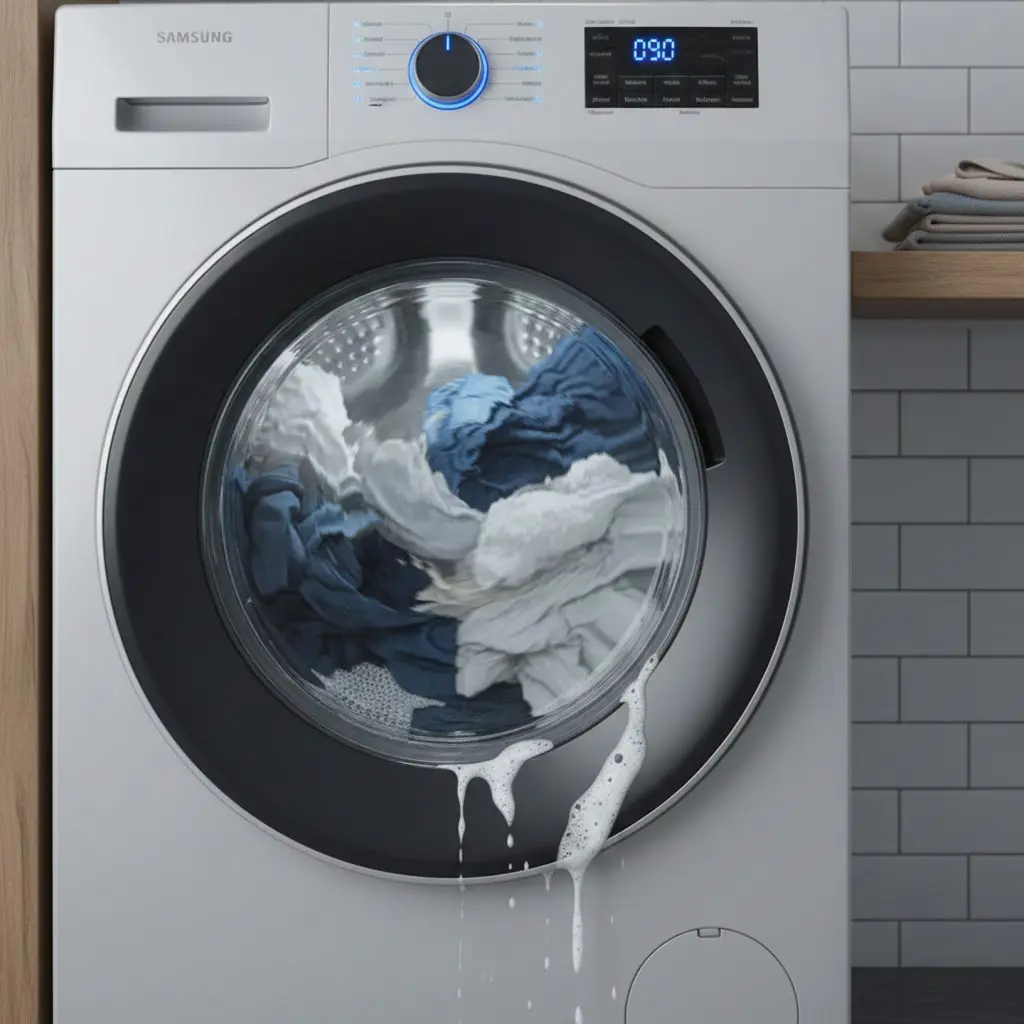
Another common issue is excess foam. Using too much detergent or the wrong type causes excessive suds, which can be forced out through the dispenser or door gasket. The solution is simple – use detergent designed for automatic washers and follow the recommended dosage.
Clogged Filter and Drain System
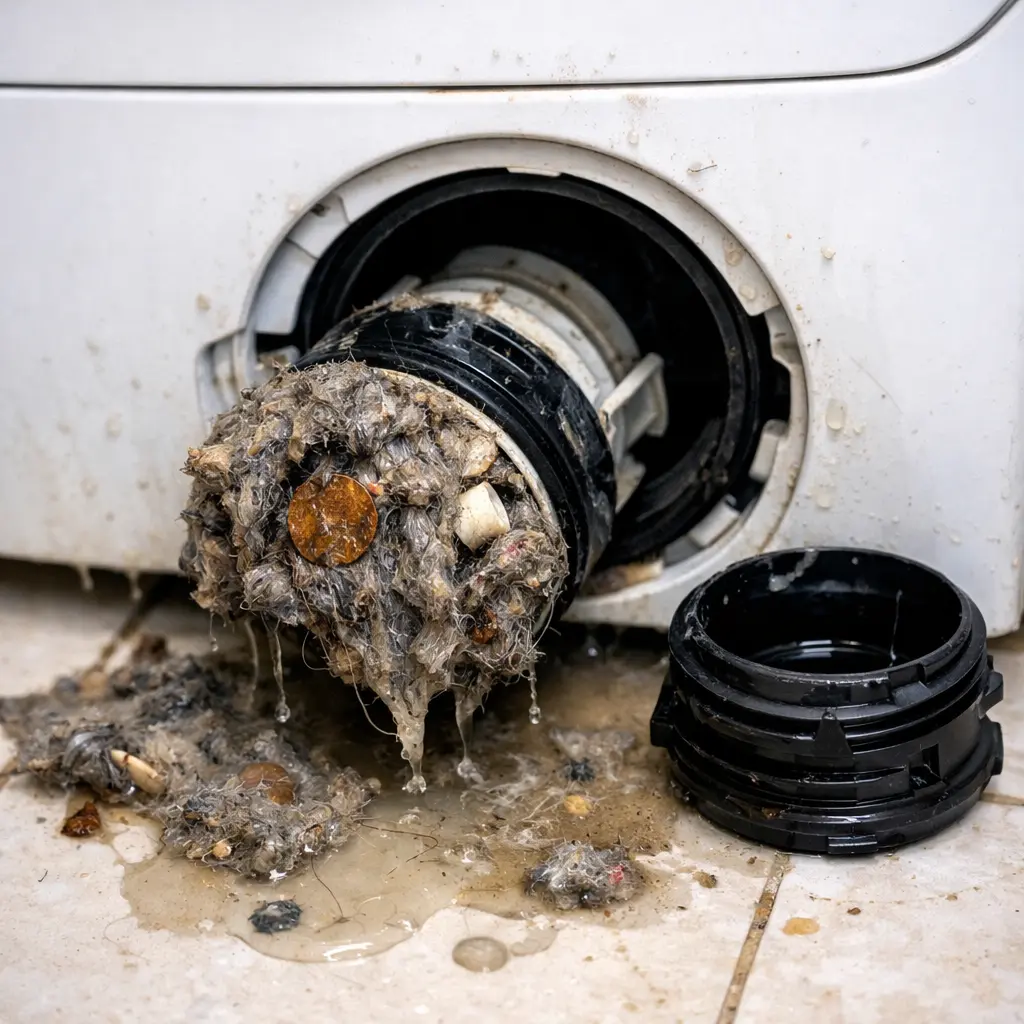
Clogs are a frequent reason water looks for an alternative way out. On front-load machines, the drain filter is usually located at the bottom behind a small access panel. Carefully unscrew it and remove debris such as lint, hair, threads, and small objects.
Also check the detergent drawer. Over time, detergent residue builds up and restricts water flow. The drawer can be easily removed and rinsed under running water.
Checking and Tightening Hoses
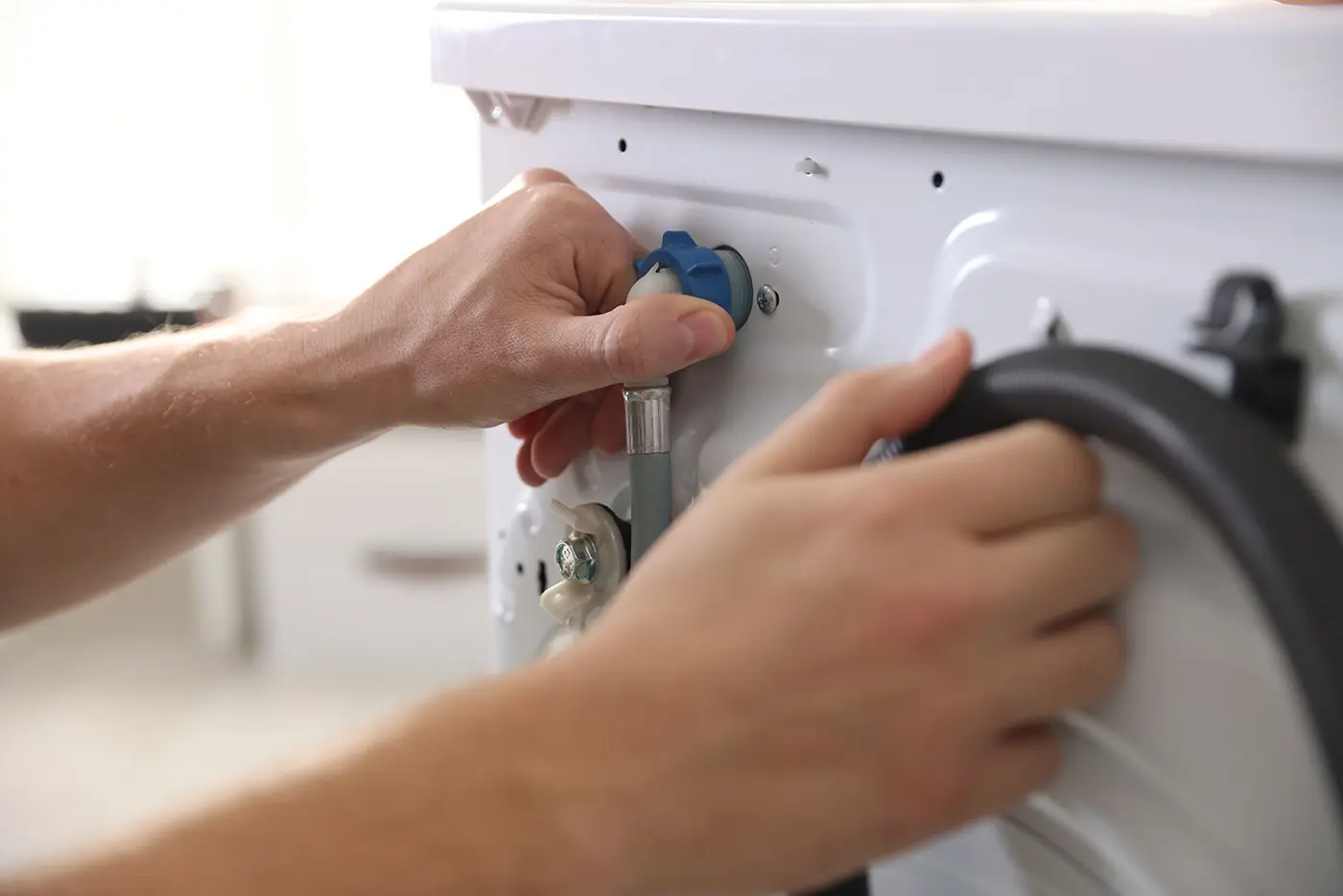
Inspect the inlet and drain hoses at the back of the machine. Even a small crack or loose connection can cause leaks. Tighten fittings and make sure the hoses are not twisted, pinched, or pressed against furniture or the cabinet.
Cleaning the Door Gasket
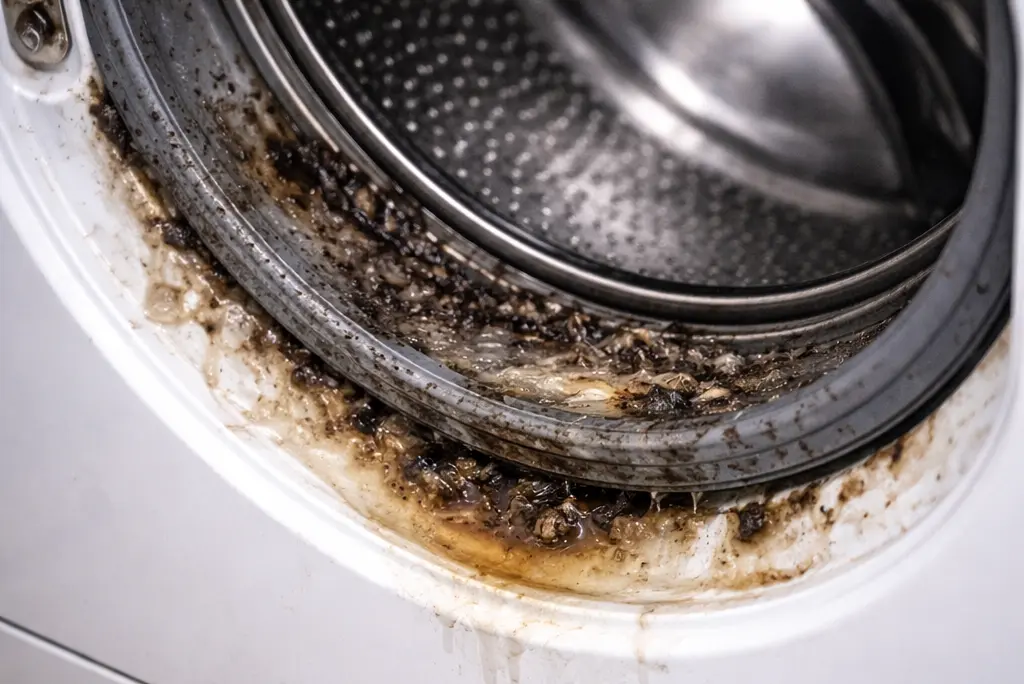
The door gasket is a common place for dirt, scale, and small items left in pockets to accumulate. Wipe the rubber seal with a damp cloth, remove debris and detergent residue, and check for folds or misalignment.
Simple Maintenance
Regularly wiping seals, cleaning accessible components, and monitoring hose condition helps prevent future leaks.

If basic checks don’t solve the issue, don’t risk your appliance or home safety. Hidden damage to the tub, pump, or internal hoses can easily worsen without experience – leading to flooding and expensive repairs.
Prime Appliance Repair provides professional washing machine repair for all brands and models. Whether it’s a leaking LG washer, Samsung, Whirlpool, or any other brand – experienced technicians quickly identify the cause of the leak and fix it safely and reliably.

Prime Appliance Repair technician
 Call Us
Problems Only a Technician Can Fix

Pump Failure and Internal Leaks
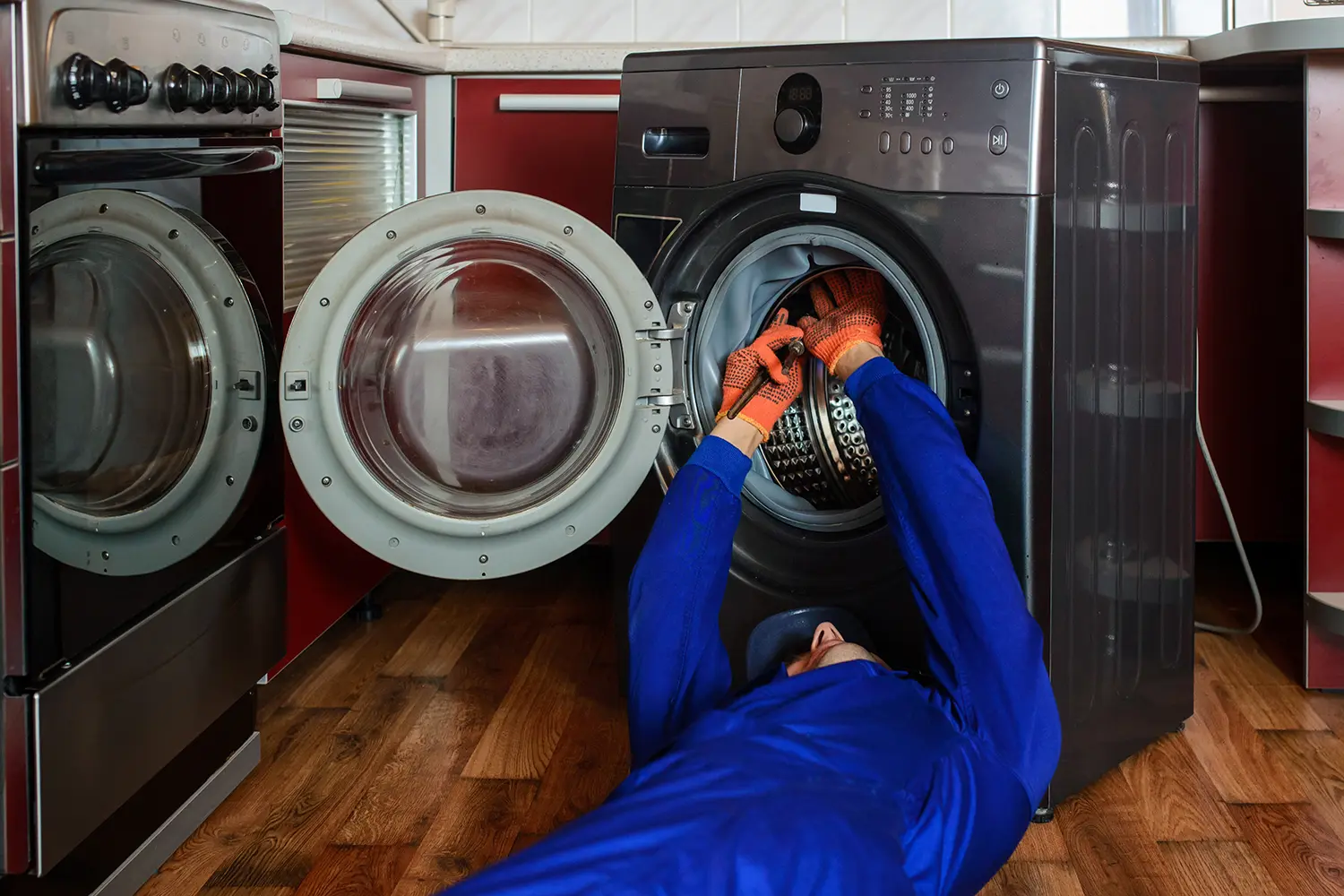
The drain pump is responsible for removing water, and when it wears out or cracks, water leaks inside the cabinet. Externally, this often looks like unexplained water pooling under the machine. A technician performs diagnostics, checks connection tightness and pump condition, and replaces the pump if necessary with the correct part for the specific model.
Damage to the Drum Housing
If the outer tub cracks or develops micro-cracks, water can slowly seep out, worsening during washing and spinning. This issue cannot be fixed with sealant or temporary solutions. A technician fully disassembles the machine, assesses the damage, and determines whether the tub or part of it needs replacement.
Worn Seals and Gaskets
Over time, seals and gaskets lose elasticity and no longer hold water. Leaks may not be immediately noticeable but continuously damage internal components. The technician performs near-complete disassembly and installs new original parts.
Faulty Sensors and Electronic Valves
Malfunctions in water level sensors or solenoid valves can cause overfilling and leaks even when the machine is off. The technician checks the electronics, tests components, and replaces and calibrates parts as needed.
All these issues require precise diagnostics, professional tools, and original parts – making professional service essential.
Call Us
«Contact Prime Appliance Repair – our experienced specialists thoroughly inspect your appliance, quickly identify the source of the leak, and fix it reliably. We don’t just solve current issues – we help extend the life of your washing machine so it works longer and without interruptions.»
Prime Appliance Repair technician
Call Us
Practical Prevention Tips
To ensure your washing machine lasts longer and doesn’t leak, regular preventive care is essential. Even simple habits can help avoid most leak-related issues.

Regularly clean the filter and detergent drawer – at least once a month to keep water flowing freely.
Use only recommended detergents – excess detergent or improper products create too much foam and may cause leaks.
Check leveling and stability – make sure the machine stands evenly, especially before spin cycles.
Avoid overloading the drum – excessive weight increases pressure on the tub and seals.
Schedule annual maintenance – even without visible problems, professional inspection helps detect wear early and prevent leaks.
How Prime Repairs Washing Machine Leaks
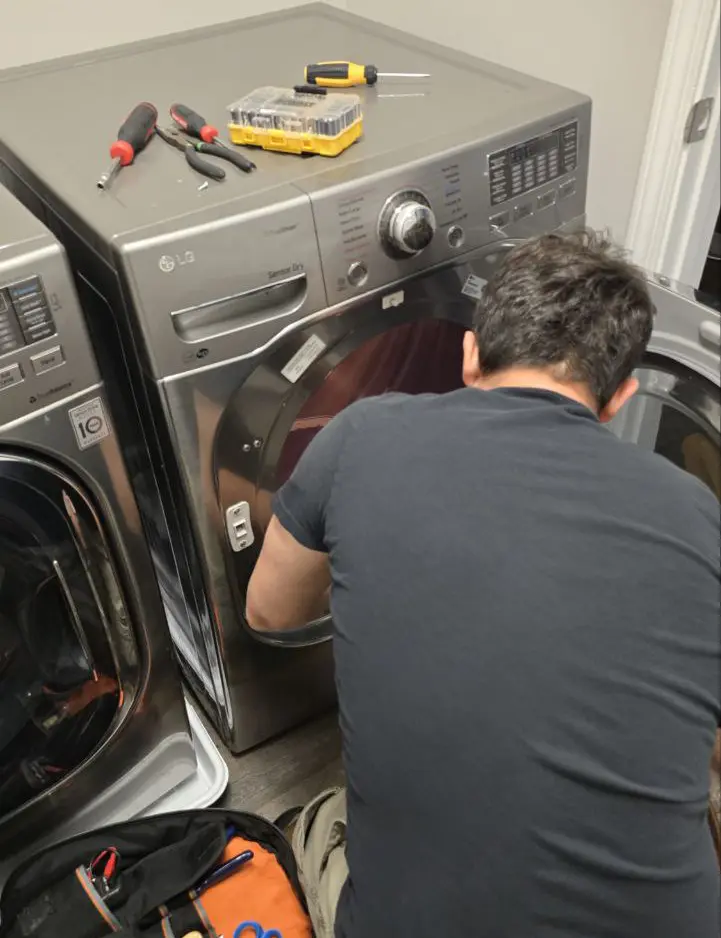
Case – Front-load LG washer leaking from bottom
 District: Huntersville
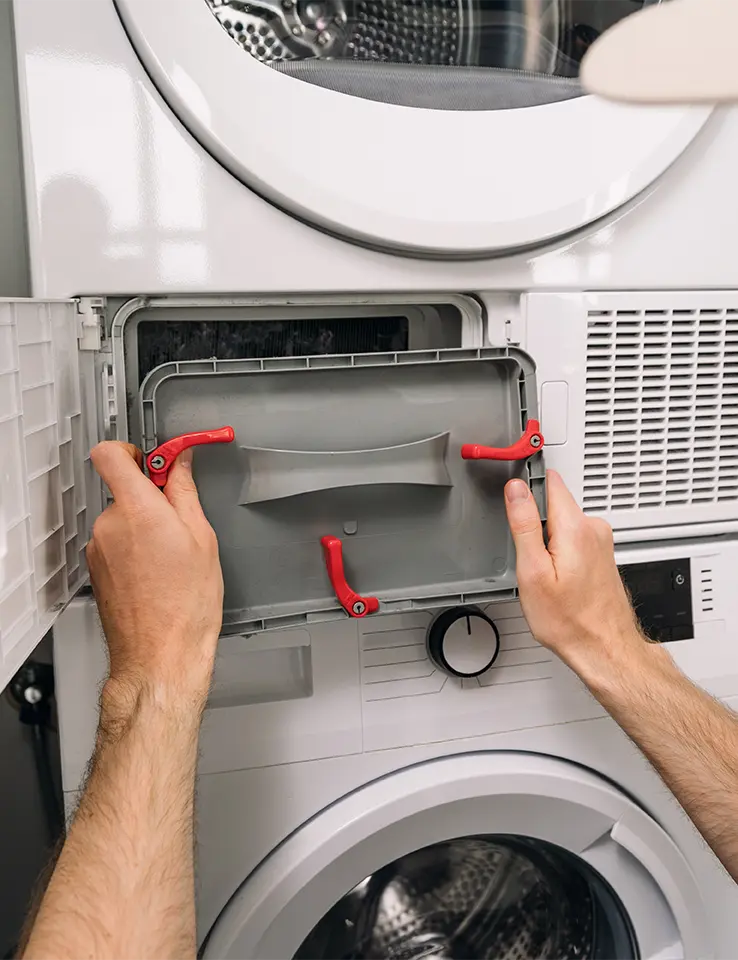
Case – Repair washing machine
District: Harrisburg
