



Fridge Still Smells After Cleaning? Here’s What You’re Missing
 February 23, 2026
 Read 8 minutes
 February 23, 2026
Content of the Article
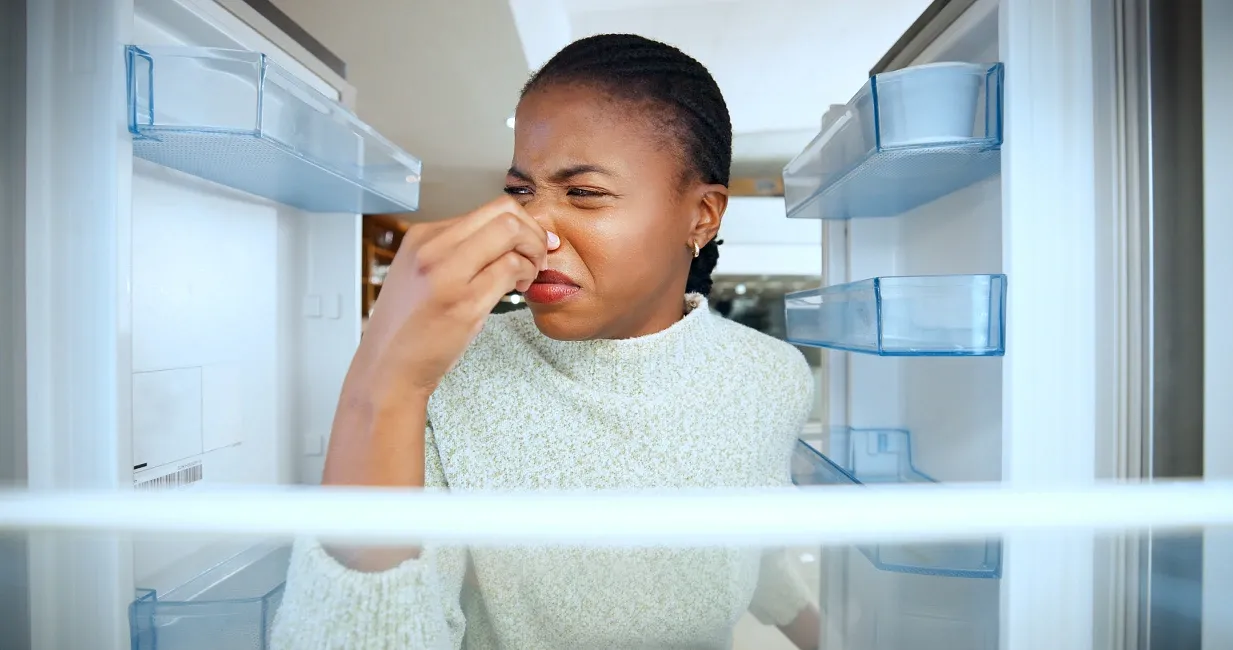
You emptied it, scrubbed every shelf, tossed old food – and somehow the smell is still there. If your refrigerator continues to give off an unpleasant odor after cleaning, the problem usually isn’t the surface. Lingering smells often come from hidden buildup, internal components, or areas most people forget to check.
This guide explains why fridge odors persist, where they typically hide, what you can do to eliminate them for good, and when refrigerator repair may be necessary.
Why Does My Fridge Smell Even After I Cleaned It?
A refrigerator can continue to smell for several reasons – and most of them are not obvious at first glance.
Common explanations include:
- Organic residue lodged in seams, vents, or behind panels
- Internal components such as drain systems collecting stagnant moisture
- Filters that have absorbed odors and are now releasing them back into circulation
If the root source remains untouched, the odor will return no matter how many times you wipe the interior.

The Most Overlooked Causes of Persistent Refrigerator Odor
Surface cleaning alone rarely solves the issue. Odors typically originate in areas that are partially concealed or difficult to access.
Trapped Food Particles in Hidden Gaps
Small bits of food can slip into narrow crevices, beneath drawer tracks, or behind interior panels.
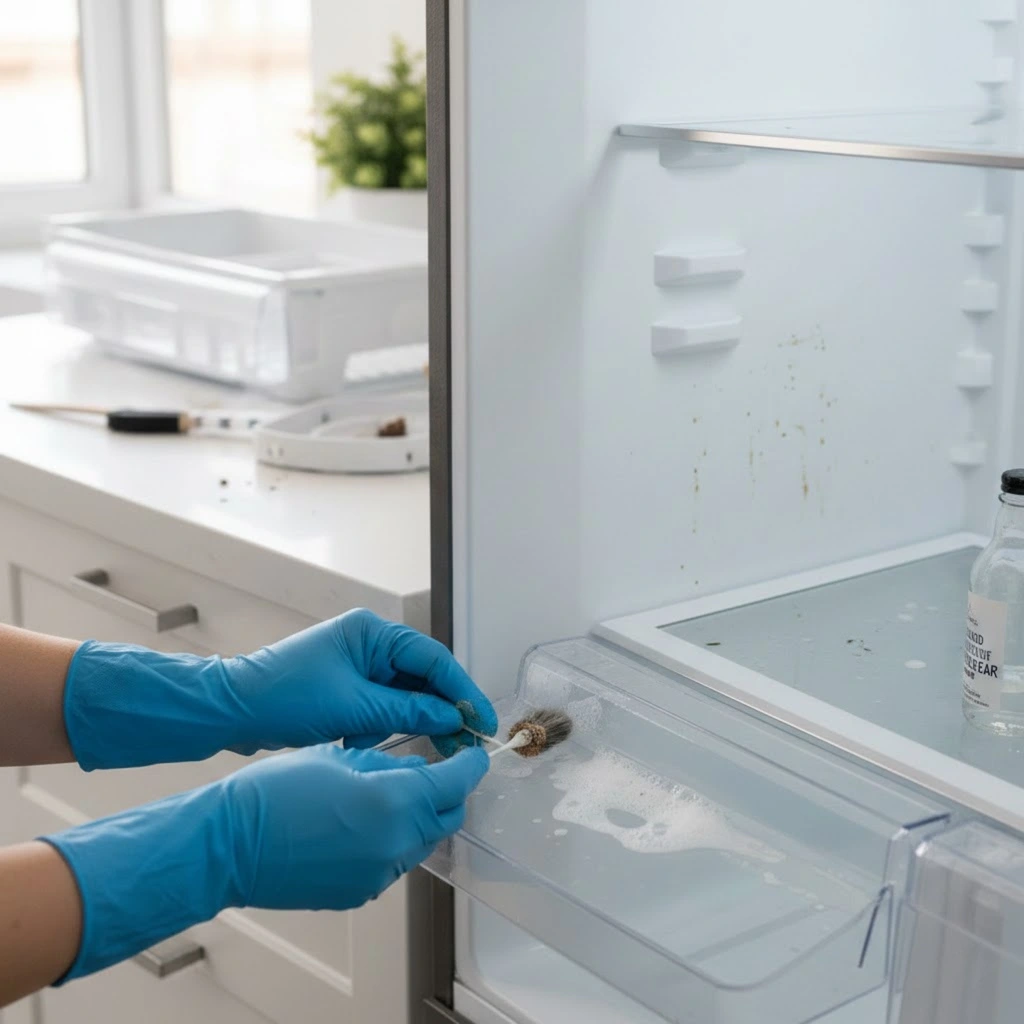
As these particles break down, they produce strong smells that circulate every time the compressor runs. To properly inspect these areas, remove all shelves and bins. Check along seams, under rubber gaskets, and around the back interior wall. A mixture of warm water and mild soap works well, or use diluted vinegar for deeper deodorizing. For tight spaces, a soft brush or cotton swab helps reach buildup without damaging plastic parts.
Leaks and Microbial Growth Beneath Shelves
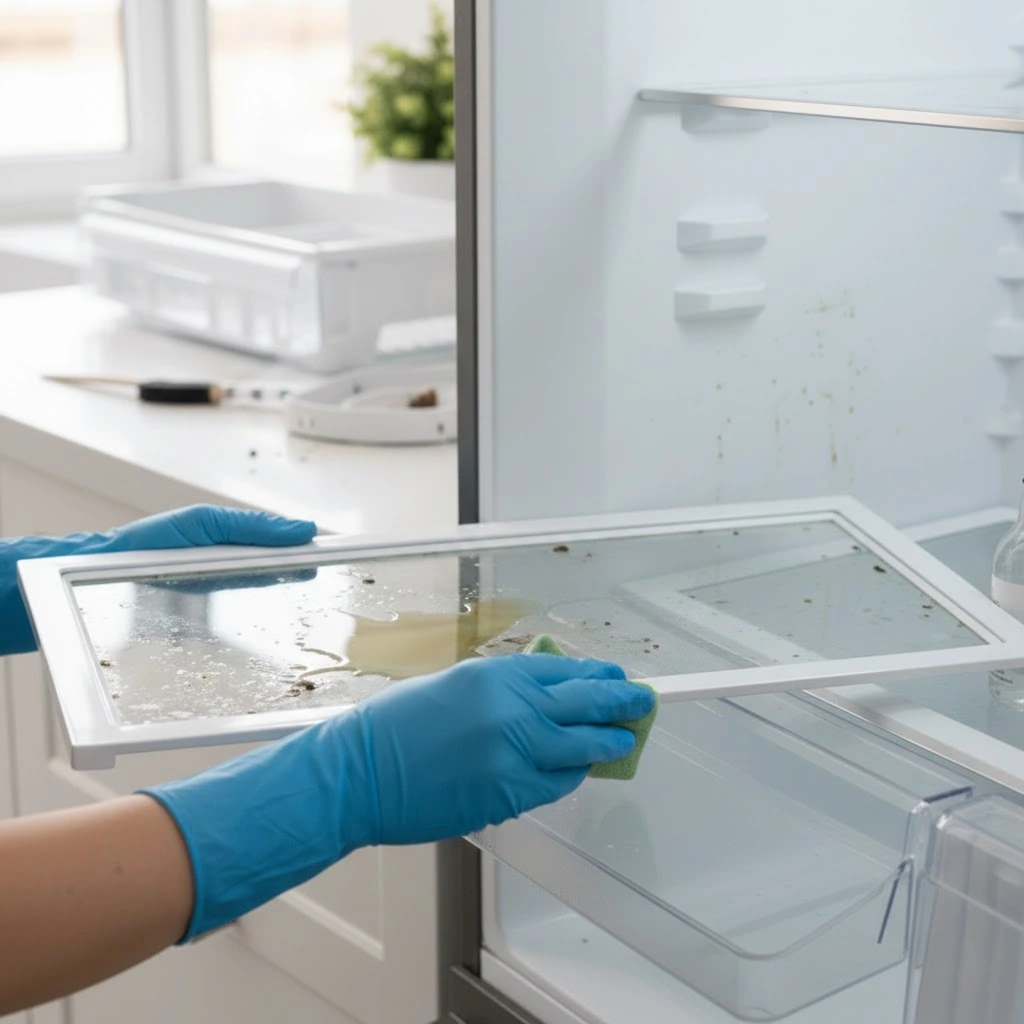
Even minor spills that go unnoticed can become breeding grounds for bacteria.
Liquid that seeps under glass shelves or collects in drawer channels may not be visible until odor develops. Remove each component fully and wash it separately. Avoid abrasive cleaners – they can damage surfaces and create new areas where bacteria can accumulate.
Compromised or Dirty Door Gasket
The rubber seal around the door plays a critical role in maintaining internal temperature and humidity.
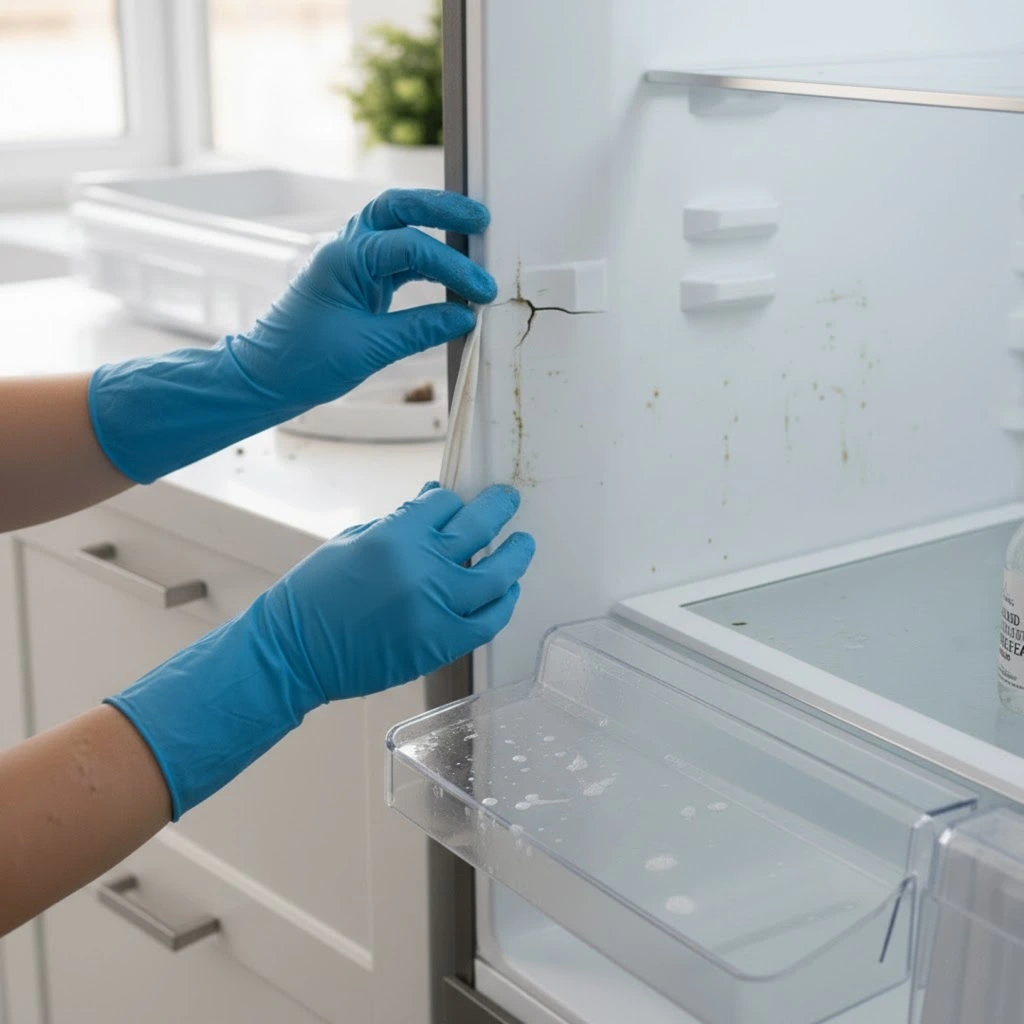
If the gasket is coated with grime or starting to crack, warm air enters the fridge – increasing moisture and intensifying smells. Clean the folds carefully with warm soapy water and dry thoroughly. If the seal no longer sits flush against the frame, replacement may be necessary to prevent recurring odor problems.
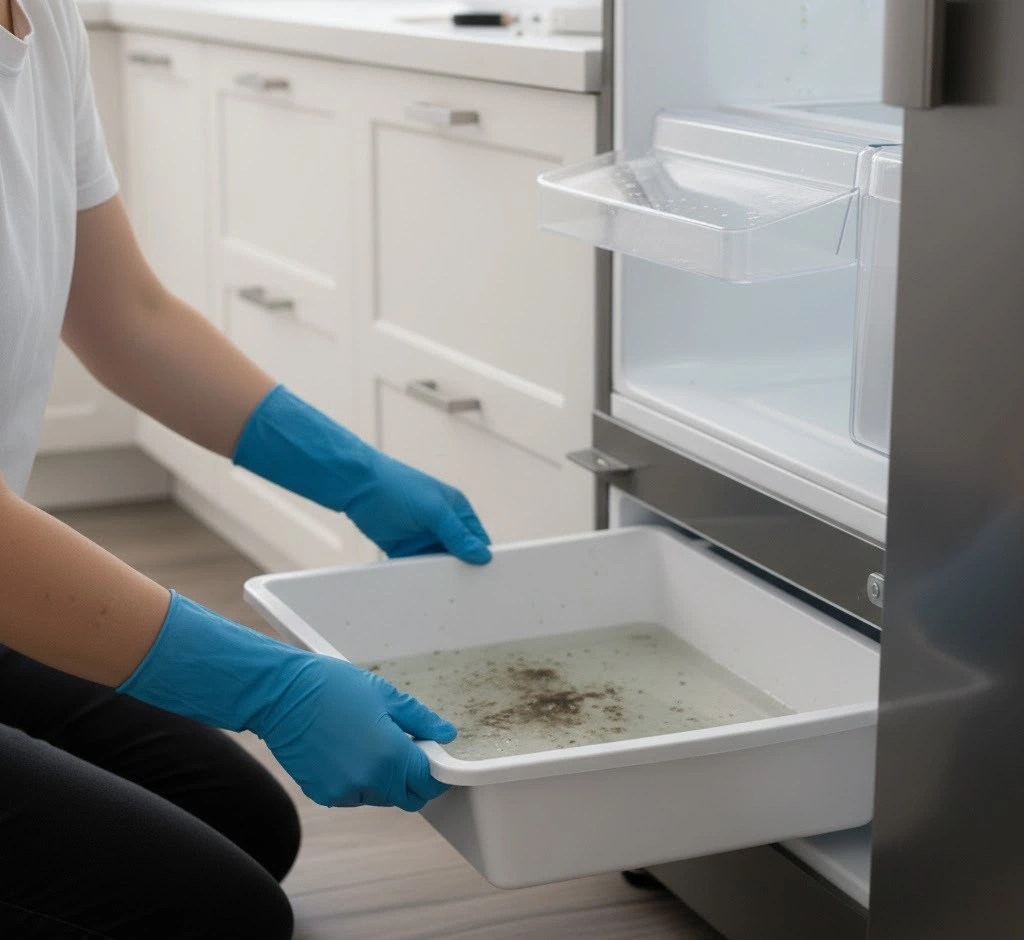
Drain Pan and Drain Tube Buildup
Most refrigerators channel condensation into a drain pan located beneath the unit.
Over time, standing water and debris in this pan can produce a musty or sour smell. In some models, the drain tube itself may clog, causing moisture to stagnate. Carefully remove and rinse the drain pan with hot water. If accessible, flush the drain tube to remove residue. Performing this maintenance every few months helps prevent odor development.
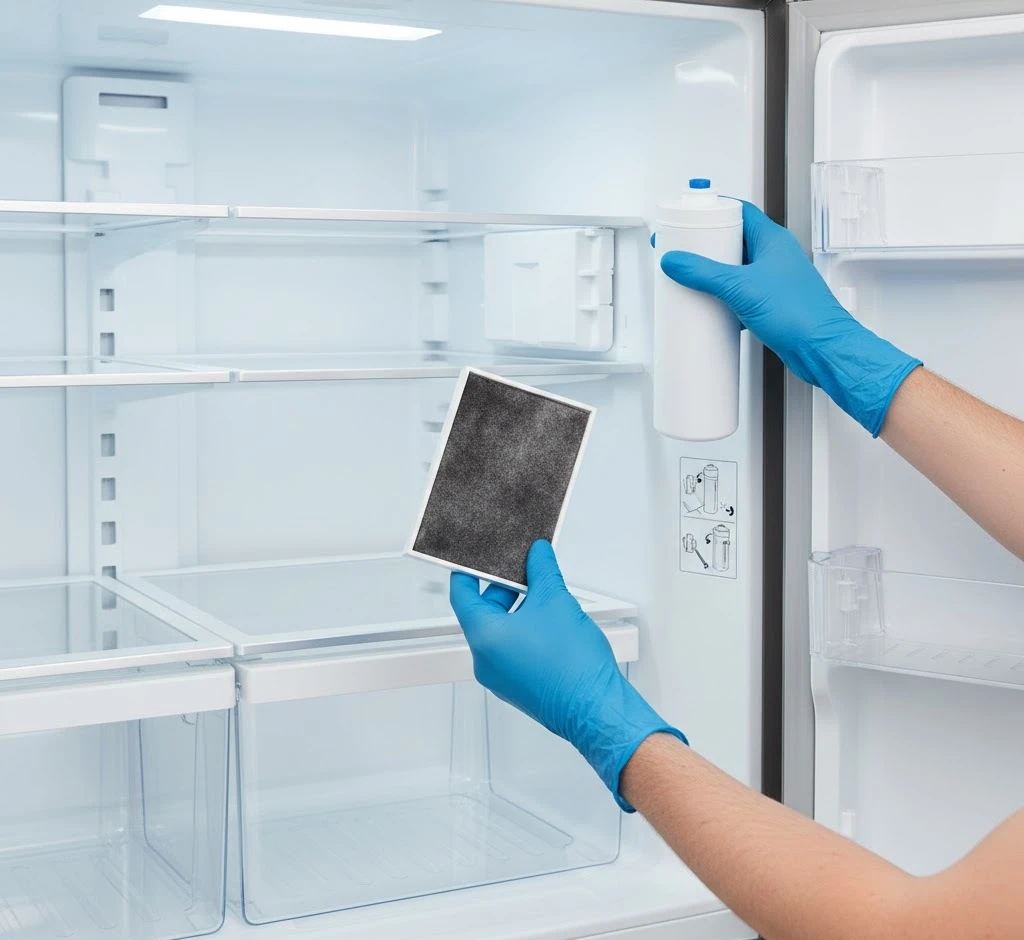
Expired or Saturated Air and Water Filters
Modern refrigerators often include air purification or water filtration systems.
Once filters reach capacity, they stop absorbing odors and may begin to emit them instead. Consult your appliance manual to locate the filters. Most manufacturers recommend replacement every 6–12 months, depending on usage.
Why Odors Survive Even After a Deep Clean
Even a detailed interior wash may leave certain zones untouched. Problem areas frequently include:
- Rear interior panels
- Air circulation vents
- Drain assemblies
- Door gasket channels
Accessing these components sometimes requires partial disassembly. If odor persists despite thorough cleaning, professional inspection may be the safest and most effective solution.
Could the Freezer Be Causing the Smell?
In some cases, the source is not the refrigerator compartment at all – it’s the freezer.
Strong-smelling frozen items, uncovered food, or ice that has absorbed odors can affect the entire appliance. Because air circulates between compartments, smells can transfer easily.
To eliminate the freezer as a potential source:
- Inspect frozen products to ensure packaging is tightly sealed
- Dispose of items that have exceeded their recommended storage time
- Thaw the freezer if excessive frost has accumulated
- Clean interior panels using a mild baking soda mixture
If the smell does not improve, examine the shared drainage system located under the appliance.
Step-by-Step: How to Eliminate Recurring Fridge Odors
When unpleasant smells keep reappearing, use this systematic method:
- Empty the refrigerator completely and remove any items that look questionable – expired or spoiled food is often the hidden trigger.
- Detach shelves, drawers, and storage bins and wash them individually.
- Thoroughly wipe and dry the door seal, paying attention to folds.
- Check filtration components and install new ones if they are overdue.
- Clean the condensation tray and confirm there is no pooled water.
- Carefully sanitize vents, corners, and interior joints.
- Apply a natural odor neutralizer, such as an open box of baking soda, to absorb remaining smells.
- Let the unit air-dry fully before powering it back on.
The goal is to remove the underlying source rather than temporarily masking the scent.
How Prime Repairs Washing Machine Leaks
How to Keep Your Refrigerator Fresh Long-Term
Ongoing care significantly lowers the risk of odor returning:
- Check contents regularly and clear out aging products
- Clean internal surfaces routinely instead of waiting for buildup
- Follow manufacturer recommendations for timely filter changes
- Service the drainage components at scheduled intervals
- Keep food sealed in properly closed containers
- Leave enough space inside the fridge to allow consistent air movement
Regular upkeep is what prevents unpleasant smells from reappearing.
