



Freezer Not Holding Temperature: Food Thawing While the Compressor Keeps Running
 April 7, 2026
 Read 14 minutes
Content of the Article
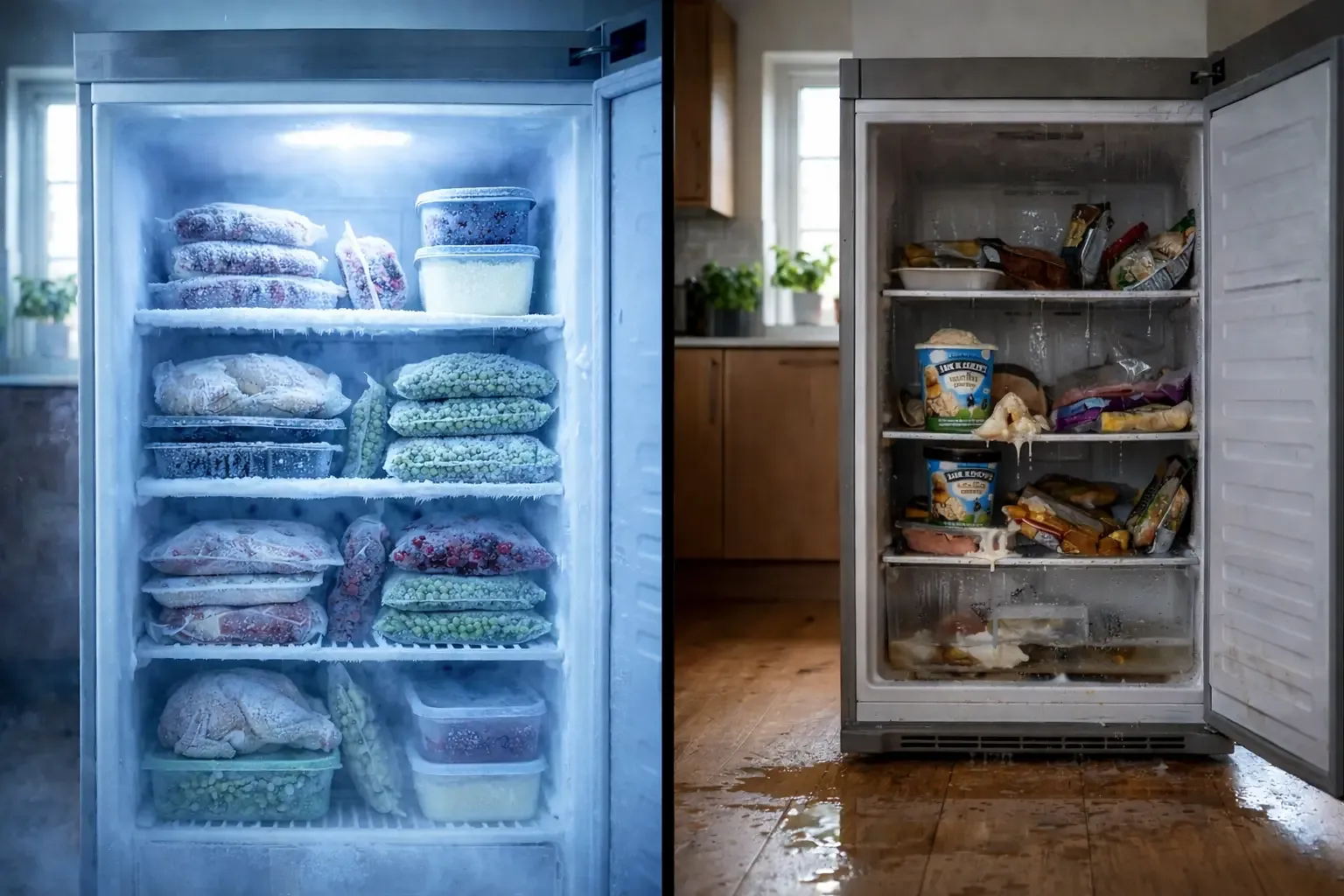
In some cases, food in the freezer begins to thaw as the temperature rises to around -10°F to -6°F, even though the compressor continues running nonstop. This issue appears in roughly 40% of refrigerator repair service calls.
The issue usually stems from a breakdown somewhere in the cooling chain. Let's break it down:
- How the freezer cooling system works
- Why it stops freezing even when the motor is running
- What you can check and fix yourself
- When it's time to call a professional freezer repair technician
Why Is the Freezer Running but Not Freezing?
First, here's a quick look at how the cooling system operates:
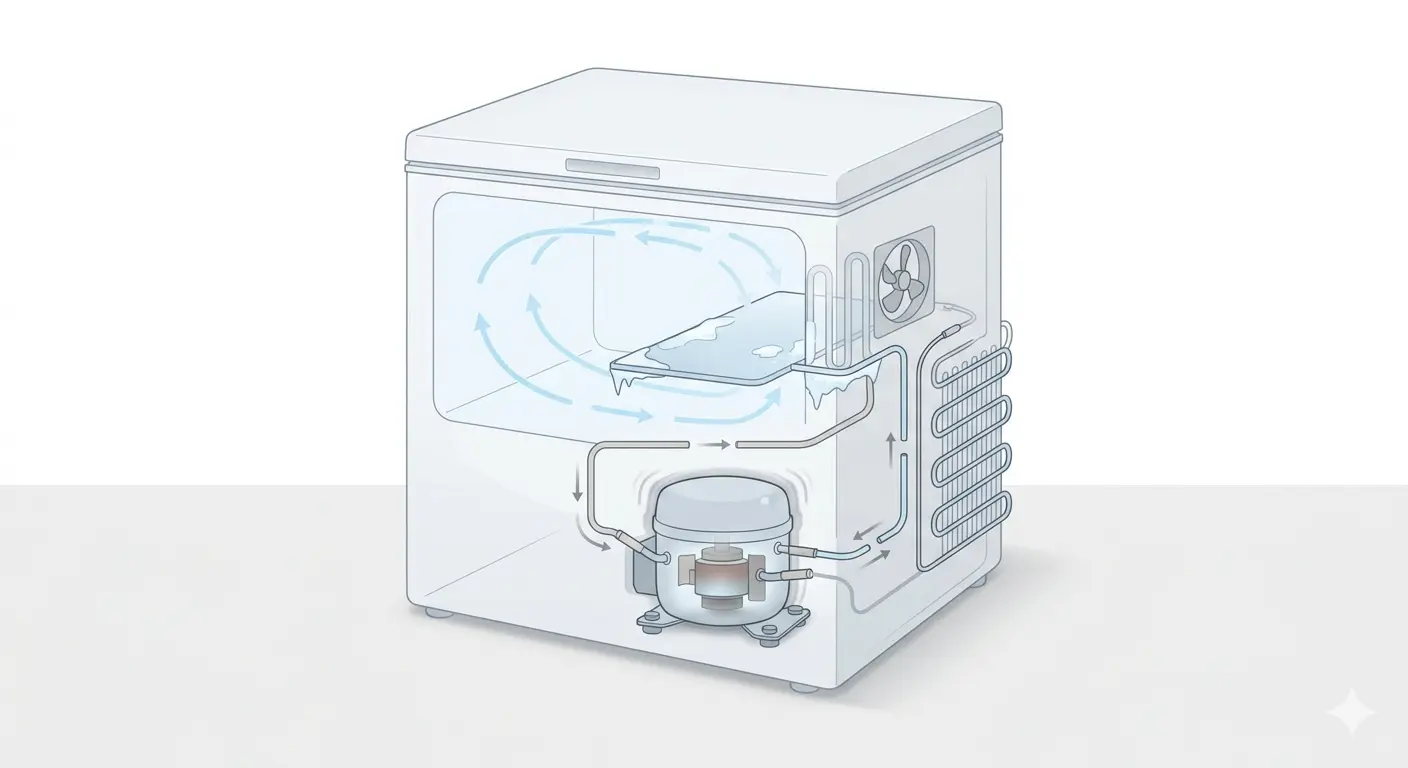
- Inside every freezer, a special refrigerant gas (freon) circulates. The compressor squeezes it to high pressure, heating it up, and it releases that heat through the condenser (the grid on the back or bottom).
- The hot gas cools down, turns into liquid, and flows into a narrow capillary tube. Pressure drops sharply there, the refrigerant expands and boils in the evaporator – a cold coil or plate inside the compartment. That's when it pulls heat out of the freezer air.
- In No Frost models, a fan circulates the cold air throughout the compartment for even cooling down to -0°F to -11°F (-18…-24 °C).
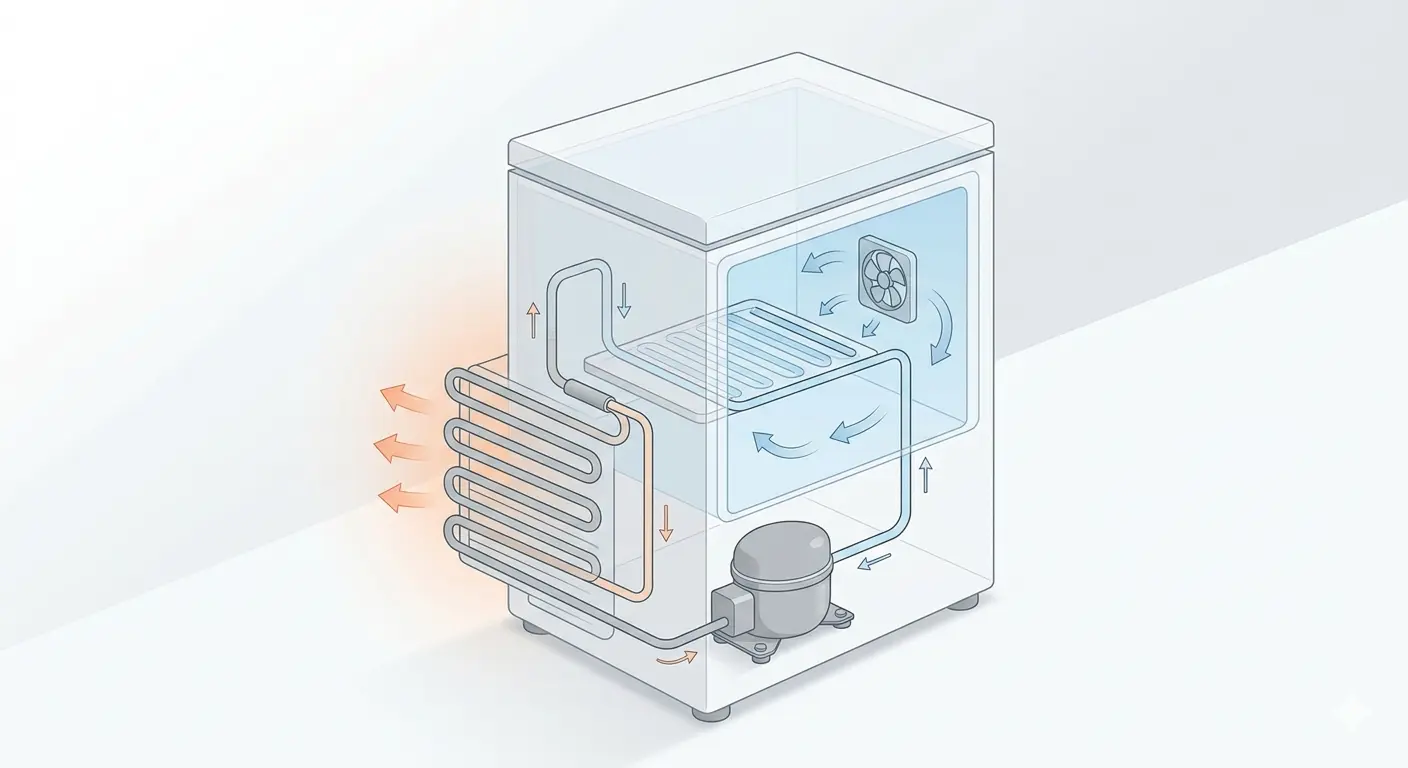
If any part of that chain fails – refrigerant leak, blockage, weak compressor, evaporator icing up, or fan stopped – the freezer loses its cooling power. The compressor keeps running anyway. So the motor runs for hours, but the compartment stays too warm to freeze properly.
Top 10 Reasons a Freezer Won't Hold Temperature
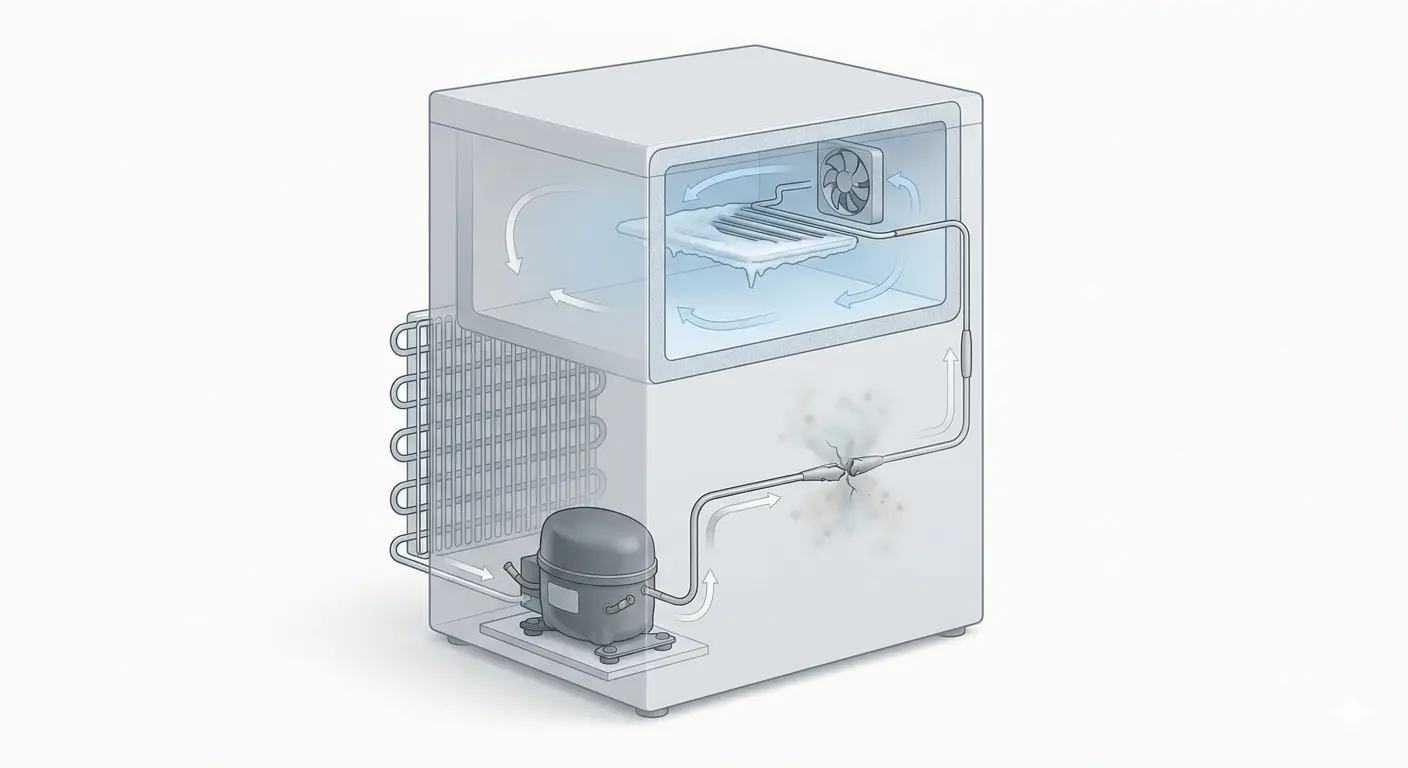
Refrigerant leak: Gas escapes through tiny cracks. The compressor runs constantly, and the compartment warms up over 24 hours.
Cause: corrosion in the tubing from moisture buildup.
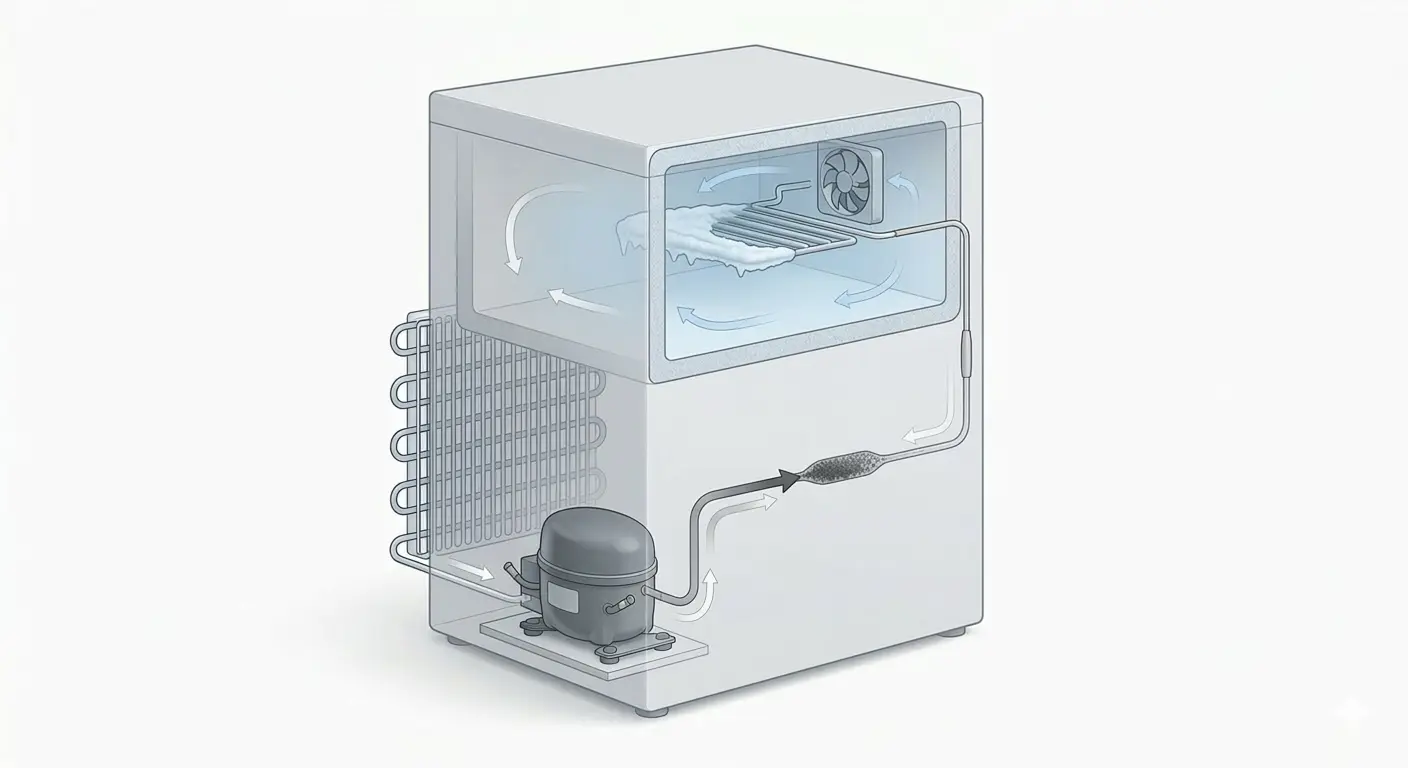
Clogged capillary tube: Oil or debris blocks the flow. Compressor overheats to around 176°F (80°C), cooling weakens.
Cause: poor-quality refrigerant or missing/dirty filter.
Faulty compressor: Worn piston. [cite: 164] It hums but can't build enough pressure, so temps don't drop below about 14°F (-10°C).
Cause: voltage fluctuations in the 220V supply.
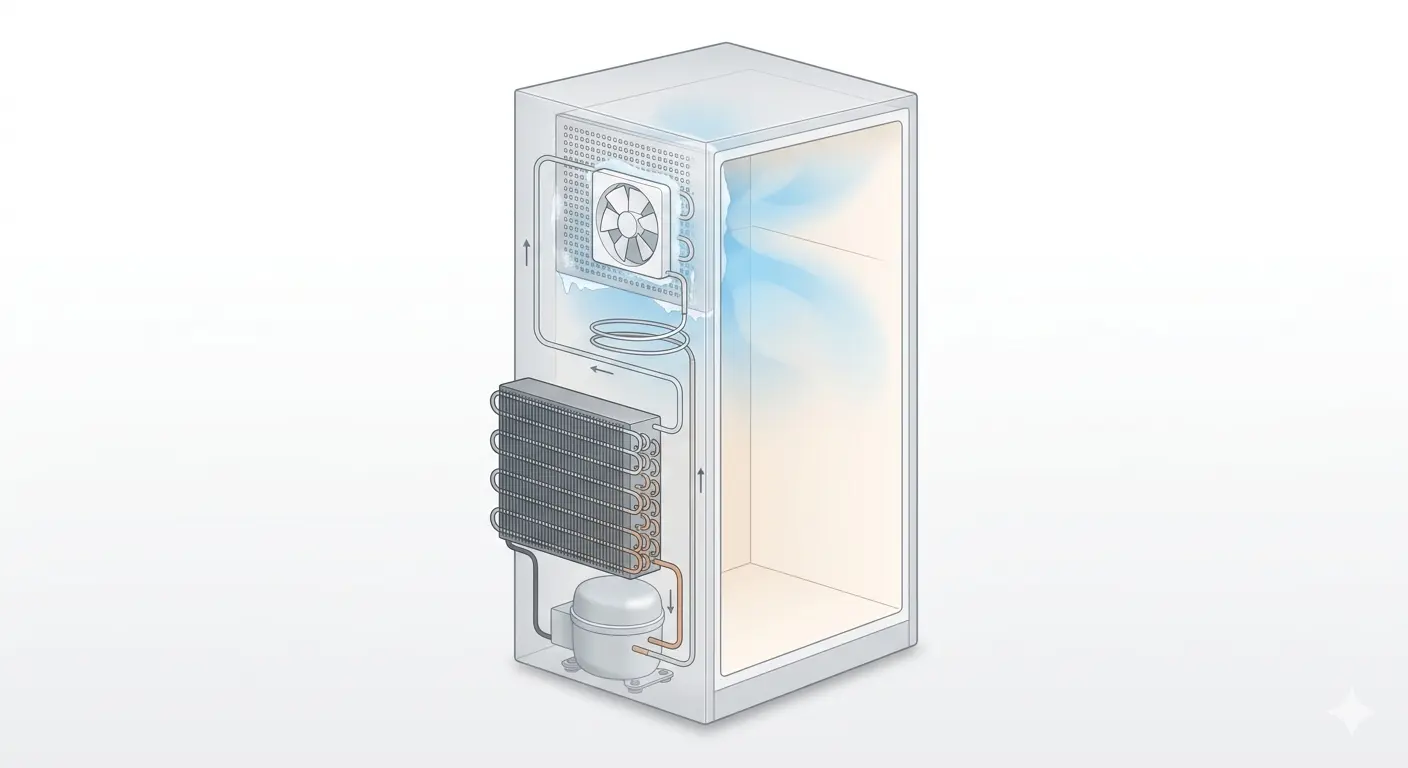
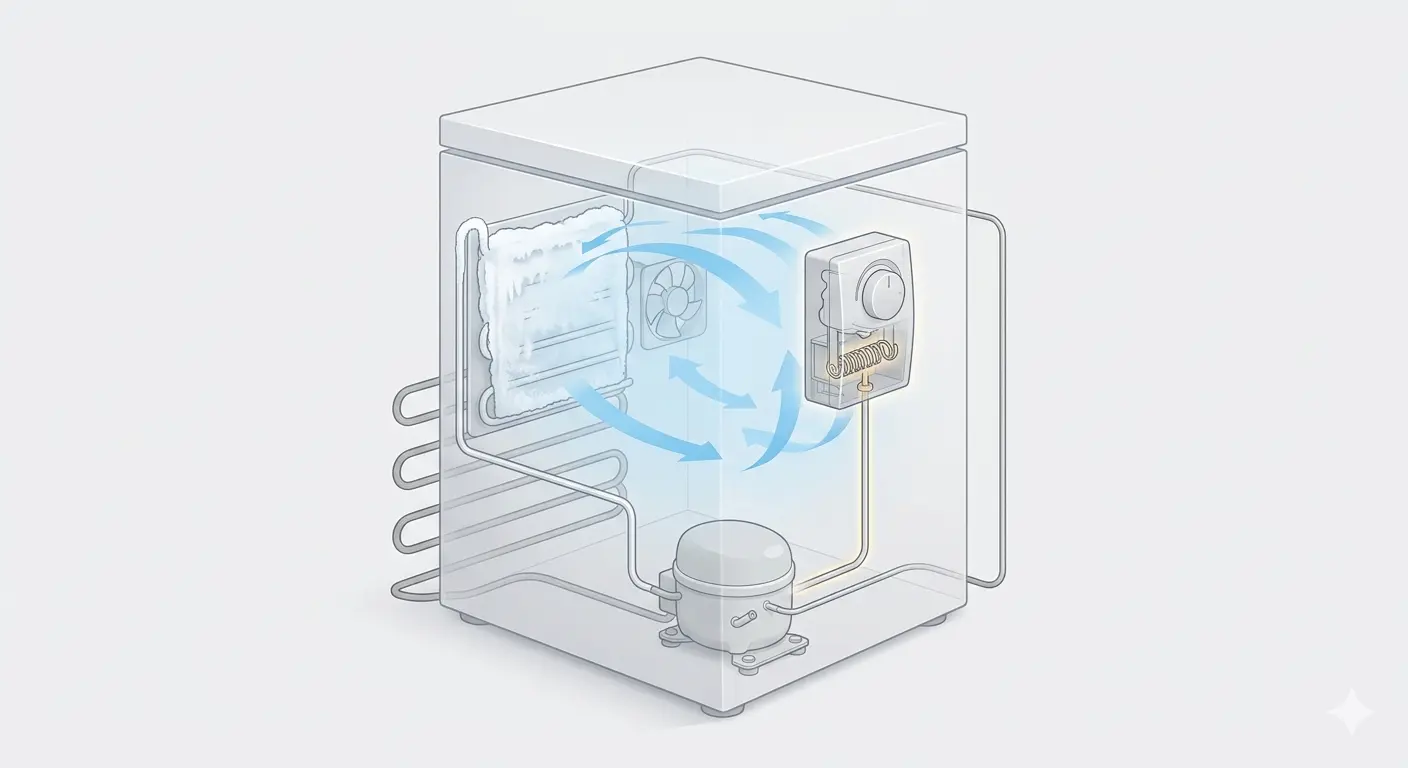
Broken evaporator fan (No Frost models): Blades won't spin. Air stops moving, frost builds unevenly.
Cause: motor winding failure after about 5 years of use.
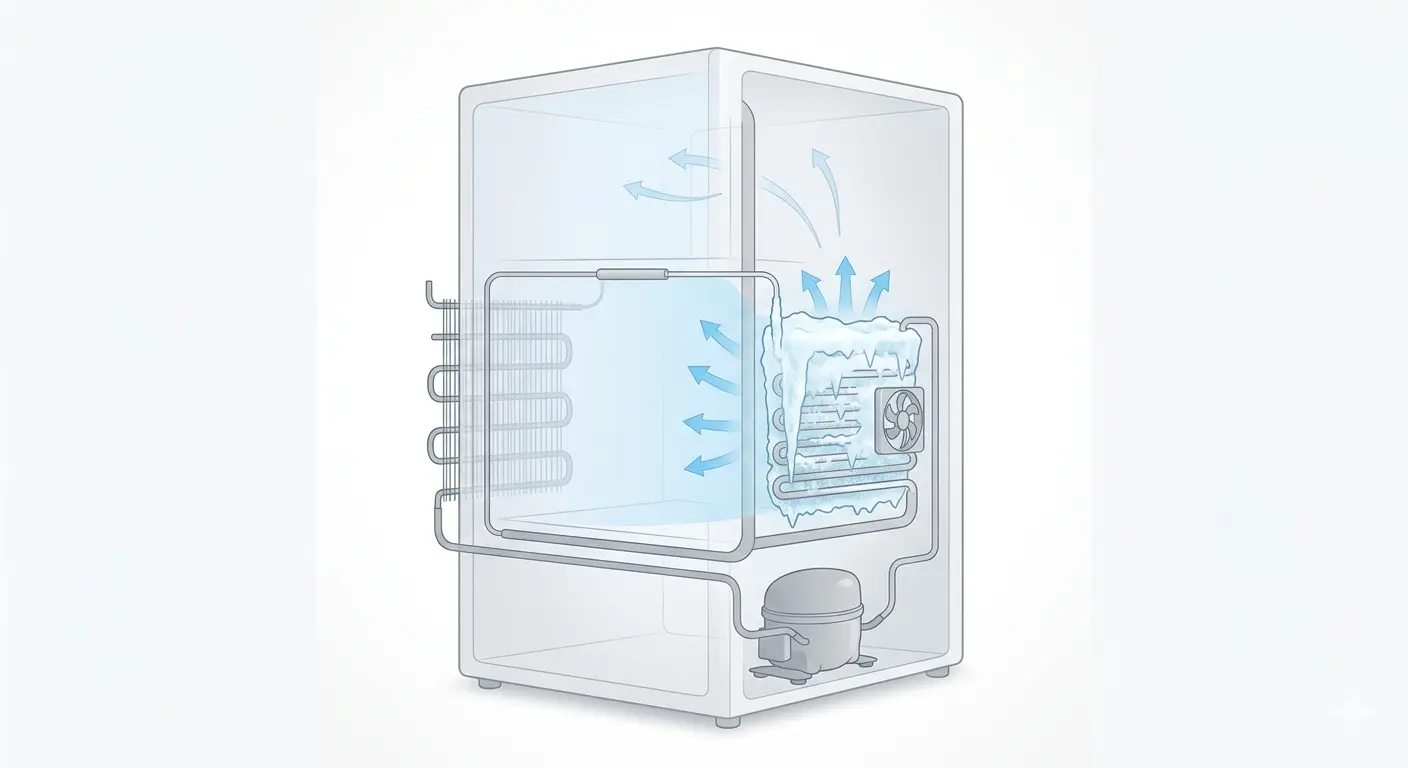
Evaporator icing over: Thick ice (up to 2 inches/5 cm) blocks heat transfer. [cite: 165] Fan may still run, but cold doesn't reach the compartment.
Cause: defrost heater failure.
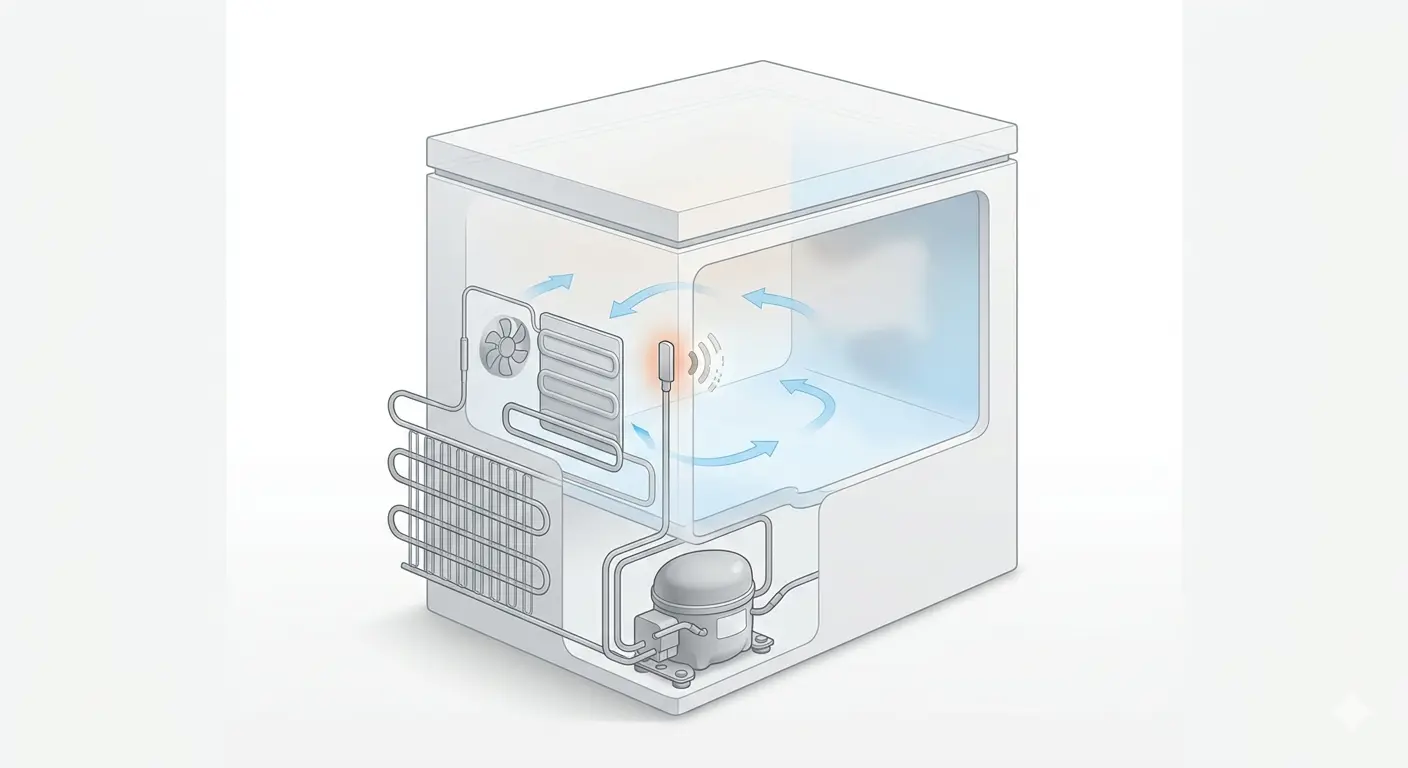
Bad temperature sensor: Gives false readings. Compressor cycles on rarely, holding around 23°F (-5°C).
Cause: corroded contacts from condensation.
Thermostat issues: Doesn't control cycles properly. Motor runs 40 minutes straight without pausing.
Cause: worn spring after 7+ years.
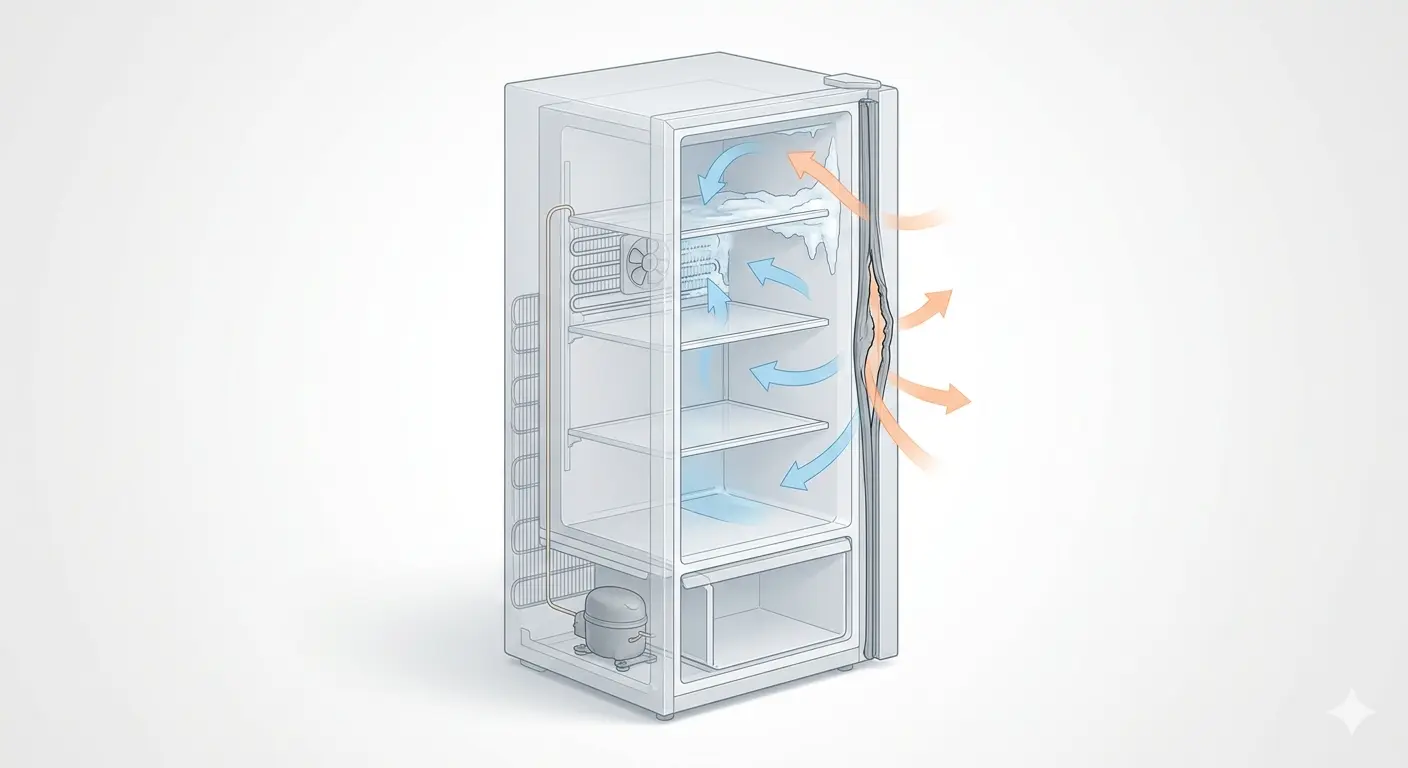
Worn door gasket: A 2 mm gap lets warm air in. Frost forms on food, temperature rises 9°F (5°C) in an hour.
Cause: rubber deformation (possibly from harsh cleaners).
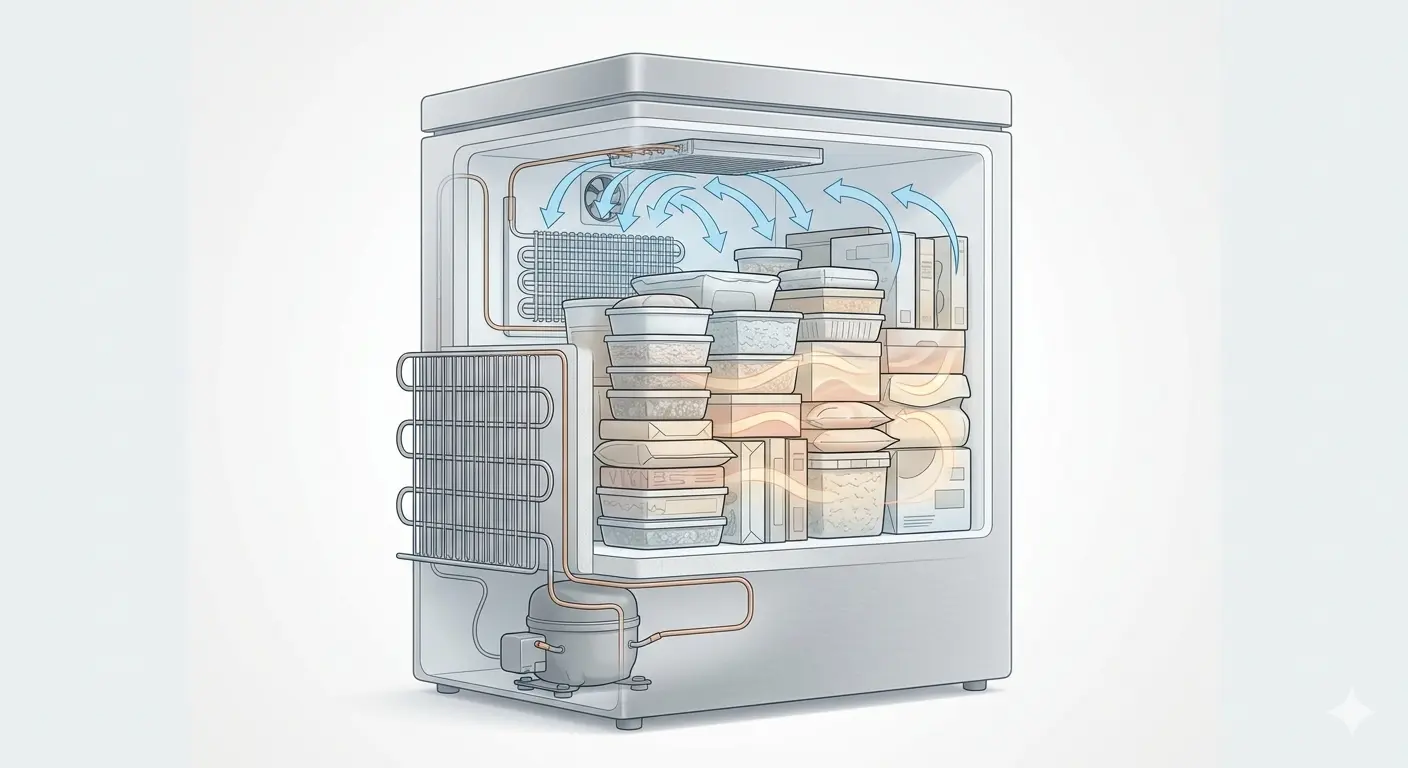
Overloaded freezer: Items fill 90% of the space. Air can't circulate, temps creep up to about 10°F (-12°C).
Cause: packing too tightly without gaps.
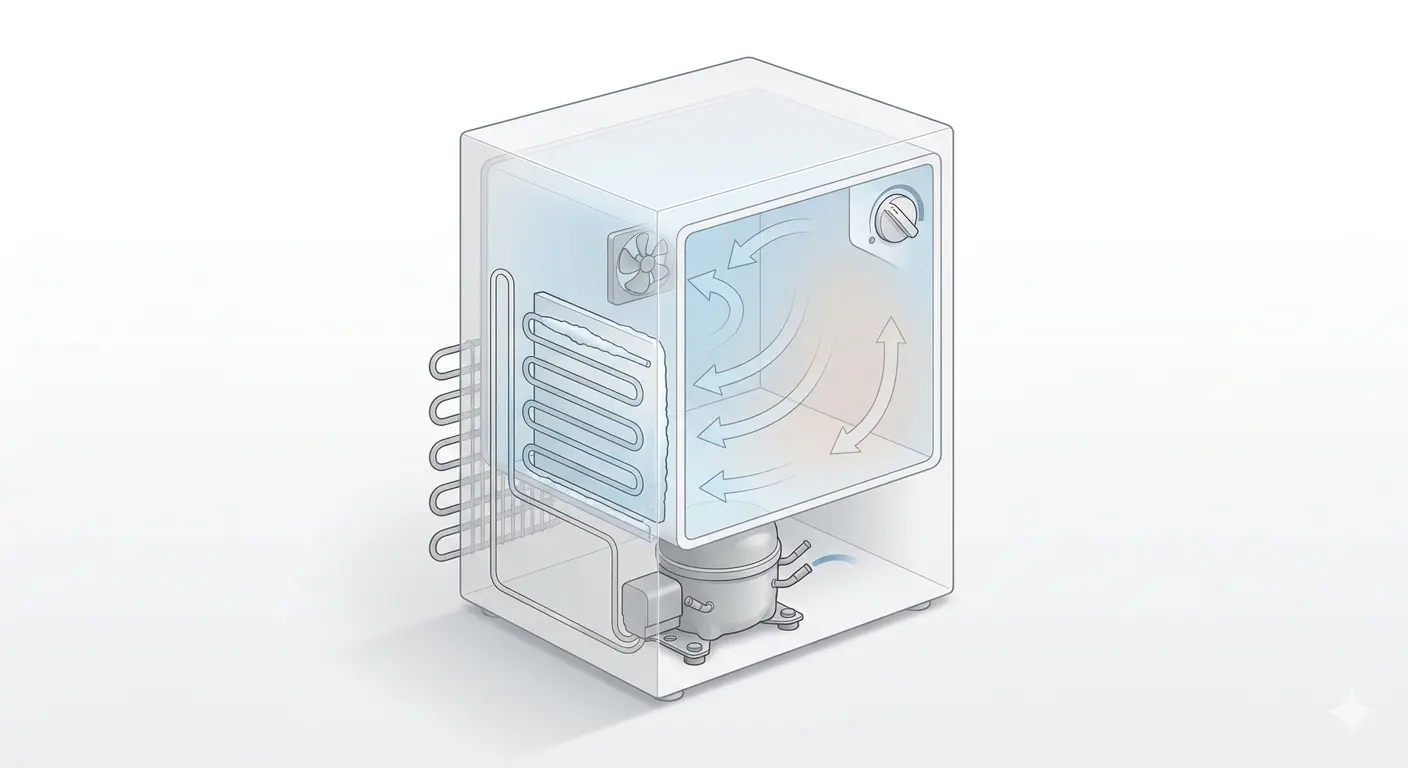
Incorrect temperature setting: Dial turned too low. Compartment only reaches around 18°F (-8°C) instead of 0°F (-18°C).
Cause: accidental knob bump.
How to Figure Out What's Wrong Without a Technician
Run a quick 15–30 minute self-diagnostic – it often points you in the right direction.
- Is the fan making noise?
If yes, air circulation is probably okay; if silent, the fan motor has likely failed. - Ice on the back wall or evaporator?
A thin, even layer up to 1/8 inch (3 mm) is normal; a thick "fur coat" of 1½+ inches (4+ cm) means defrost problems. - Does the compressor feel hot to the touch (around 130–150°F / 55–65°C)?
That's a sign it's running; if it's cold, it isn't starting or has zero pressure. - Door sealing tightly?
Close a sheet of paper in the door – if you can't pull it out easily, the seal is good. If it slides right out, air is leaking past the gasket. - Compressor running nonstop for over 30–40 minutes?
Points to a likely refrigerant leak, capillary clog, or weak compressor.

Our techs have over 10 years of experience fixing refrigerators across North Carolina, including plenty of cases where the freezer isn't freezing.
A technician can reach Charlotte and nearby areas in about an hour, check the compressor, defrost system, temperature sensors, and look for refrigerant leaks. We use genuine parts, with a 90-day warranty on labor and components.

How to Fix a Freezer That's Not Cooling Enough
What You Can Do Yourself
Start by fully defrosting the compartment: unplug it for at least 12–24 hours, remove all ice and water, and let the evaporator dry completely. Then vacuum the condenser coils (the rear grid) thoroughly – dust can cut heat dissipation by 30–40%.
Wipe down the evaporator with a mild vinegar solution to remove mold or odors. Clean the door gasket with warm soapy water and check for damage. If it's misshapen, gently warm it with a hairdryer on low (around 122°F / 50°C) and press it back into shape. Set the temperature to 0°F (-18°C) – usually the 4–5 mark out of 7. Arrange items with at least 1–1½ inch (2–3 cm) gaps between them, especially important in models with bottom or rear evaporators.
When You Need a Professional
If defrosting, cleaning, and gasket checks don't bring the cold back, the problem is more serious. Recharging refrigerant involves locating the leak, sealing it with argon welding, vacuuming the system, and adding 5–9 oz (150–250 g) of gas.
Compressor replacement means removing the old one, installing a new unit (typically 120–180 W) with fresh oil and filter. Electronics repairs involve testing and resoldering sensors, control modules, or boards.
Without proper tools (manifold gauges, vacuum pump, load tester) and experience, it's easy to damage tubing, cause more leaks, or fry electronics. Best to leave serious repairs to pros.
Prime Appliance Repair has over 10 years of experience handling all types of refrigerator issues, including cases where the freezer is not freezing.
Our technicians cover Charlotte and surrounding areas with same-hour arrival, genuine parts, and a 90-day warranty on labor and parts. Don't let a small issue turn into a big expense. Book your diagnostic and repair today.
Mistakes That Make the Problem Worse
- Using a hairdryer or hot water to defrost – ice melts unevenly, evaporator plastic can crack, and tubing may warp.
- Packing the compartment completely full – blocks the fan, stops air movement, overheats the motor, and speeds up wear.
- Opening the door frequently – each time, internal temperature jumps 5–9°F (3–5°C), forcing the compressor to overwork.
- Putting hot food straight from the stove inside – steam condenses, triggers heavy frost buildup, and overloads the defrost system.
- Ignoring unusual noises or vibrations – fasteners loosen, tubing rubs, micro-cracks form, and leaks develop.
How to Prevent Freezer Problems Down the Road
Regular maintenance can add 5–7 years to your freezer's life. Fully defrost every 6 months, even with No Frost – frequent door openings can still cause ice buildup.
Vacuum condenser coils monthly: a ¼-inch (5 mm) dust layer boosts energy use by 25–30%.
Check the gasket for cracks and flexibility every 3 months – wipe it clean and apply a light silicone lubricant.
Plug the unit into a voltage stabilizer (especially in homes with swings between 180–250 V). Keep the freezer loaded to no more than 80% capacity for proper air flow and even freezing.
When to Call a Technician Right Away
Get professional help immediately if:
- Compressor runs nonstop for over 24 hours – wastes 1.5–2.5 kWh extra per day, overheats badly, and could burn out in 5–10 days.
- No cooling at all (temps above 32°F / 0°C) – food will spoil in 8–12 hours.
- Burning or plastic smell appears – almost certainly a short in wiring or windings.
- Noise gets louder with knocking or rattling – compressor bearings or mounts are worn.
- Problem returns 1–2 days after full defrost and cleaning – likely a leak, clog, or defrost failure.
Don't delay.
